Inkopolis: A City Built on Ink
The capital of Inkling culture, from the Plaza to the Square
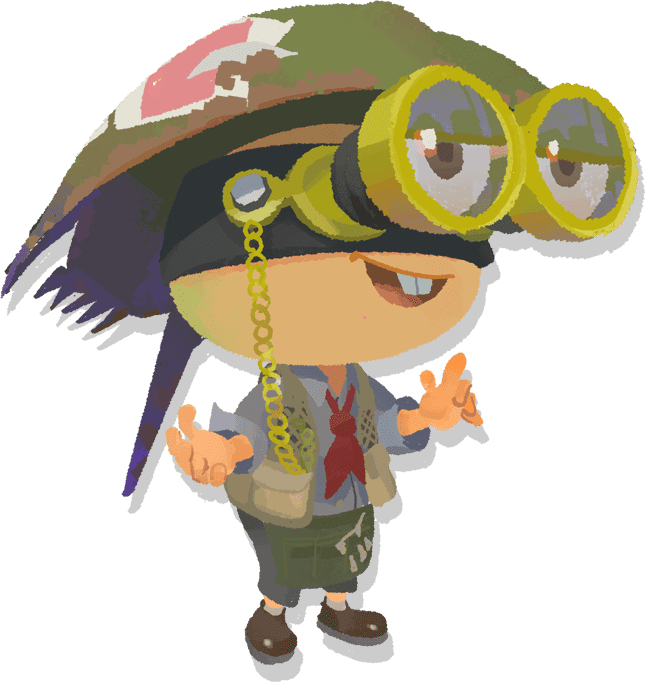
Inkopolis is the first place most players ever see in Splatoon, and it sets the tone for the whole series. It is loud, bright, cluttered with shops and posters, and populated by teenagers who have no idea that a hundred-year-old war is being quietly refought underneath their feet. It is a city built, quite literally, on ink: the Great Zapfish curled around Inkopolis Tower keeps the lights on, and the sport of Turf War keeps everyone busy.
Inkopolis Plaza
In the first game, the hub is Inkopolis Plaza, a compact district in the shadow of the tower. Everything an Inkling needs is within a few steps: Ammo Knights, where Sheldon sells weapons with the enthusiasm of a kid explaining his favorite toy; the Booyah Base gear shops run by Annie, Jelonzo, and Crusty Sean; the back alley where the sea urchin Spyke reroll gear abilities for Super Sea Snails; and the lobby where the day's Turf War matches are queued up. Judd the cat sits on his cushion by the manhole, judging results and dispensing bonus cash.
Overhead, the Squid Sisters host Inkopolis News from a glass studio, announcing stage rotations and, occasionally, a Splatfest. A manhole cover in the corner of the Plaza leads to Octo Valley, and hardly anyone but the player ever notices.
Inkopolis Square
Two years later, the second game moves the action to Inkopolis Square, a larger district of the same city. Off the Hook take over the news from a studio above the square, and the shops are new: Ammo Knights is still Sheldon's, but the gear shops belong to Jelfonzo, Bisk, and Flow, and Murch has replaced Spyke as the alley hustler. Crusty Sean has traded his shoe store for the Crust Bucket food truck. Deepsea Metro's exit, the Grizzco Industries storefront, and the Shellendorf Institute museum all appear here.
The Square also introduces the Deca Tower, a new Turf War lobby, and the Great Zapfish relocates to sit on top of it. When Splatoon 3 revisited Inkopolis Square in 2023 as a second hub, players got to see it a few years on, with Off the Hook still broadcasting and the shops still open.
The Great Zapfish
No discussion of Inkopolis is complete without the catfish. The Great Zapfish is an enormous electric catfish that lounges on top of the city's tallest structure and supplies its electricity. Smaller Zapfish serve as batteries elsewhere. The Zapfish are treated with a mix of reverence and casual affection: they are essentially public utilities that happen to be alive.
Both Splatoon 1 and 2 begin with the Great Zapfish being stolen by the Octarians, and both end with it restored to its perch. Splatoon 3's story starts the same way, only to reveal that this time the culprit was someone else entirely. The Zapfish is the series' favorite MacGuffin because it makes the stakes concrete: without it, the lights in Inkopolis go out.
Inkopolis runs on two things: a very large catfish and a very short attention span.
How the city thinks
Inkopolis culture is youth culture. Inklings gain full control of their transformation around fourteen, and the city is designed for the kids who have just come into their own. Fashion matters enormously; the gear system exists in-universe as a status symbol as much as a mechanical one. "Freshness" is the highest compliment, and the Squid Sisters' sign-off, "Stay fresh!", is a genuine social creed.
It is also a city with a short memory. The Great Turf War is a hundred years old, and almost nobody in the Plaza knows Octarians still exist. Cap'n Cuttlefish, camped out in Octo Valley with a shack and a radio, is treated as a harmless eccentric. This willful cheerfulness is part of the joke, but it is also a theme: Inkopolis is a city that chose to forget its war, and the story modes are about the few people who cannot.
Inkopolis is not the only city. Splatoon 3 moves the main hub to Splatsville in the Splatlands, a rougher desert region far from the coast, and the contrast is deliberate. Where Inkopolis is polished and orderly, Splatsville is chaotic and improvised. The games treat Inkopolis as the old capital, the place where the rules were made, and a place many Inklings still consider home. Callie and Marie grew up in nearby Calamari County; Pearl's family fortune is Inkopolis money; and the Deepsea Metro's exit spills out into Inkopolis Square, which is where Agent 8 first sees the sky.
For all its changes, the city has never stopped being what the first game made it: a place where everybody is young, everybody is fresh, and the biggest news of the day is who painted more of the floor.