Turf War as Sport
How a war became a game, and why the game is the point
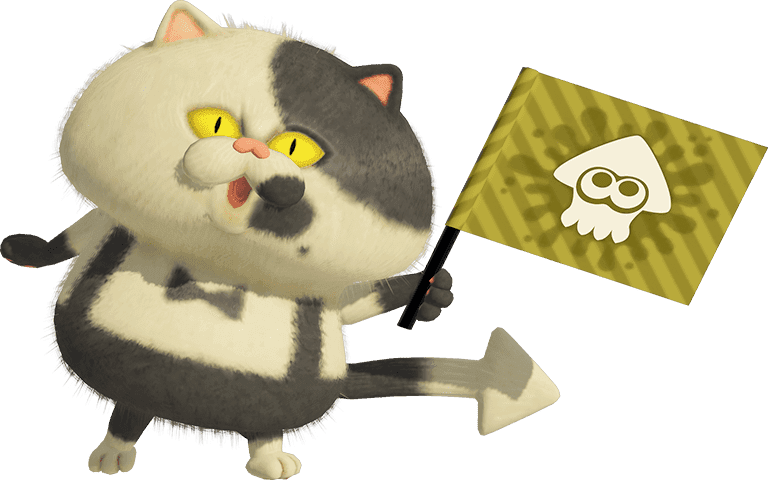
Splatoon's central joke is also its central thesis: the thing that once nearly destroyed the cephalopod species is now what teenagers do after school. Turf War, the four-versus-four contest to cover the most ground in your team's ink, is descended directly from the Great Turf War of a century earlier. The name is not a coincidence. The Inklings took their war and made it a sport.
The rules of the game
A Turf War lasts three minutes. Two teams of four Inklings or Octolings, each armed with ink weapons, try to paint as much of the stage as possible in their color. Splatting an opponent sends them back to their spawn point, but splats do not count toward the score; only ink on the ground does. When time runs out, Judd (and, since the second game, Li'l Judd) counts the turf and declares a winner.
Those rules encode a philosophy. Because coverage wins, not kills, the best players are not necessarily the most aggressive. A team that spends the match hiding at the back painting corners can beat a team of brawlers. The war became a game by shifting what victory means: not who is left standing, but who has left the most of themselves behind.
Ranked modes and Splatfests
Beyond Turf War, Inkopolis and Splatsville host competitive modes with their own lore. Splat Zones, Tower Control, Rainmaker, and Clam Blitz are treated in-universe as more serious "ranked" contests, with their own ladders and trophies. Sheldon's shop chatter and the idols' news segments imply an entire sports culture around them, complete with pro-level players, sponsorships, and fan followings.
Splatfests are the big festivals. Every so often the idols announce a question, from the first game's "Cats vs. Dogs" to the second game's "Chaos vs. Order" to the third game's three-way brawls like "Rock vs. Paper vs. Scissors", and the city splits into teams for a weekend of themed Turf War. The results are treated as canon, and a few of them have changed the course of the series. Marie's victory over Callie in the last Splatfest of Splatoon 1 set up Callie's disappearance, and Chaos beating Order at the end of Splatoon 2 shaped the entire tone of Splatoon 3.
Nobody dies in a Turf War. That is not an accident. It is the whole idea.
Equipment and the ink economy
Turf War is impossible without the Zapfish-powered ink infrastructure of the city. Spawn points, ink tanks, and the weapons themselves are all products of an industry that Sheldon's family, the Shellendorfs, helped found. The Splatoon world treats weapon design as a legitimate craft: Ammo Knights is not an armory but a hobby shop, and Sheldon talks about a new Splattershot the way a bike mechanic talks about a new frame.
Gear works the same way. The clothing sold by Annie, Jelonzo, Crusty Sean, and their successors is fashion first and function second. Abilities on gear are treated in-universe as perks of good brands, and the back-alley reroll services of Spyke and Murch are the gray market of a fashion economy. Turf War is a sport with a merch table.
Why it matters
It would be easy to read all this as set dressing, but the games keep insisting that the sport is a moral achievement. The Octarians never made the same transition. Their society stayed militarized, their kids stayed soldiers, and their leaders kept fighting the same war. The Inklings, by contrast, are frivolous, forgetful, and obsessed with shoes, and the games treat that frivolity as a kind of wisdom. They did not forgive the Octarians so much as stop caring, and when Octolings finally reach the surface in the Octo Expansion, they are welcomed onto the Turf War stage without a second thought.
That is the sharpest argument the series makes. The way to end a war is not to win it harder. It is to make it into something you can lose on a Tuesday and shrug about. Splatoon 3's Tricolor Turf War, which pits three teams against each other on a shared stage, extends the same logic: even a three-way rivalry can be a party if everyone agrees it is a game.
Presiding over all of it is a cat. Judd, the only mammal in the city (until Splatoon 3 complicated that), sits at the center of Inkling sport as an impartial judge. He does not play, he cannot swim in ink, and he has no stake in who wins. It is a lovely, quiet touch that the last survivor of the old world is the one who counts the paint and tells the kids who did better. The war is over. Somebody has to keep score.