The Calamari Inkantation
The song that won a war and freed a people
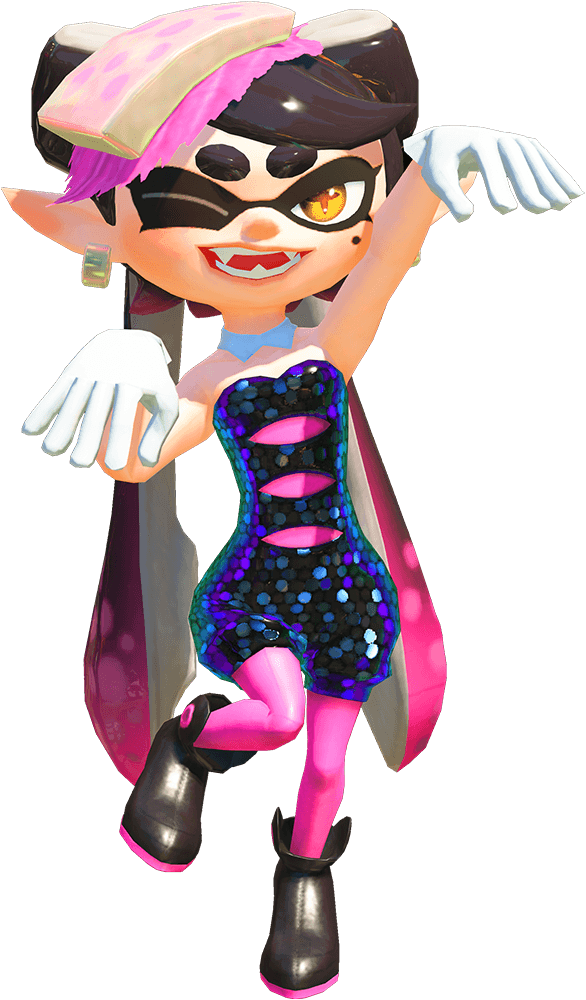
Most fictional pop songs are set dressing. The Calamari Inkantation is a plot device, a weapon, a liberation anthem, and, in-universe, the most important piece of music ever written. Performed by the Squid Sisters, Callie and Marie, it first plays during the final boss of Splatoon 1, and its echoes reach all the way to Splatsville and the Memverse.
The song itself
In-universe, the Calamari Inkantation is a Squid Sisters original, sung in the Inkling language (rendered in the games as a bright, nonsensical chant that fans have transcribed with loving inaccuracy for a decade). Its lyrics are never translated. What matters is the feeling: it is urgent, joyful, and impossible not to move to. The Squid Sisters perform it live at every Splatfest, and it is the closing number of their Inkopolis Plaza concerts.
The songwriters, credited in-universe as the Squid Sisters themselves, come from Calamari County, a rural region outside Inkopolis where Callie and Marie grew up. Their grandfather, Cap'n Cuttlefish, is a war veteran, and fans have theorized that the song's martial energy has family roots.
The Octavio fight
The Inkantation's first canonical appearance is mid-battle. In the final fight of Splatoon 1, as Agent 3 struggles against the Octobot King, Cuttlefish patches the Squid Sisters' concert through the radio. The music seems to physically rally Agent 3 and disorient DJ Octavio, whose own turntable attacks are thrown off rhythm. The game does not explain why. It is implied that Inkling ink and Inkling music are connected on some level, that a song sung with enough conviction becomes a kind of force.
It is one of the great moments in the series. The war that started with a war song ends with a pop song, and the old soldier who fought the first one gets to hear the second on a crackling radio.
Cuttlefish did not win with a weapon. He won with a phone call to a concert.
Reaching the domes
The Inkantation's real consequences show up two years later. The Octarian domes beneath Octo Valley and Octo Canyon are sealed off from the surface, but sound travels. Splatoon 2's Octo Expansion reveals that the song leaked into the underground and that Octolings who heard it were changed by it. Marina, then an engineer in the Octarian army, describes hearing the Calamari Inkantation and feeling for the first time that there was a world above worth reaching. She deserted, made her way to Inkopolis, and eventually became one half of Off the Hook.
She was not alone. Agent 8, the protagonist of the Octo Expansion, is another Octoling who heard the song and left. The expansion's dialogue makes it clear that a generation of young Octolings had the same reaction. The Octarian army's propaganda could hold a war grudge for a hundred years, but it could not compete with a pop song about being alive.
The Octarian exodus
By Splatoon 3, the leak has become a flood. The Octarian army is deserting en masse, and Octolings are a normal sight on the streets of Splatsville and Inkopolis. DJ Octavio, freed from his snow globe, finds his forces scattered and his war unwinnable. The game credits the Calamari Inkantation directly: the song reached the domes, and the Octolings who heard it followed it up to the surface.
This is why the Squid Sisters' return in Splatoon 3's story mode lands so hard. Callie and Marie, now Agents 1 and 2 of the New Squidbeak Splatoon, are not just idols. They are the reason the war ended. When the Inkantation plays during the final battle against Mr. Grizz, with Deep Cut and Off the Hook joining in, it is the whole cephalopod world singing the same song that once split it.
The Inkantation shows up everywhere. Its melody is woven into Splatoon 2's final Splatfest, into Splatoon 3's Grand Festival, and into Side Order, where Marina's Memverse is haunted by the music that changed her life. Dedf1sh, the DJ formerly known as Acht, remixes it; Deep Cut cover it; Pearl and Marina reference it constantly.
More than any single character, the Calamari Inkantation is the series' argument about how wars end. Not with the surrender of the losing side, but with the day its children decide they would rather be somewhere the music is playing.